
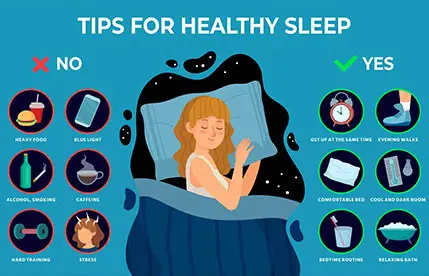


Are you having trouble sleeping at night? You’re not alone. Millions of individuals have insomnia or occasional sleeplessness, which can affect mood, productivity, and overall health. The good news is that there are easy steps you can take to help out your sleep quality.
This guide will discuss strategies for overcoming sleep struggles and establishing healthier bedtime routines.
1. Try Deep Breathing or Meditation
Dr. Andrew Weil developed one of the most effective methods, the 4-7-8 breathing technique. This technique is based on an ancient yogic practice called pranayama. It is known to reduce stress, lower blood pressure, and promote relaxation, making it an excellent tool for sleep. Here’s how you do it:
- Inhale for 4 seconds
- Hold for 7 seconds
- Exhale for 8 seconds
2. Avoid Checking the Clock
Continuously glancing at the time heightens the fear of not sleeping, making it even more challenging to fall asleep. Instead, turn your clock around or mute your phone’s screen to avoid checking the time. If you wake in the middle of the night, reassure yourself that sleeping, even if you’re not asleep yet, is still beneficial, and try to focus on breathing slowly or practicing relaxation methods instead.
3. Get Out of Bed if You Can’t Sleep
If you’ve been tossing and turning for more than 20 minutes, get out of bed and do a calming activity like reading, stretching, or listening to soft music. Avoid screens, as blue light can further delay sleep. You can also try gently applying a lavender-infused oil, such as Efficascent Oil Extreme Lavender Scent, to your pulse points to help ease tension and soothe your senses.
4. Adjust the Room Temperature
Your bedroom is supposed to be quiet, dark, and restful. The best temperature for sleeping is 65-68°F (18.33°C-20°C). Too cold or too hot can disturb your sleep cycle.
5. Reduce Screen Time Before Bed
Smartphones, tablets, and computers emit blue light, which suppresses melatonin levels and makes it more difficult to sleep. Try to switch off devices at least an hour before retiring and choose to read or relax.
6. Practice Progressive Muscle Relaxation
This method involves tensing and relaxing various muscle groups, starting with your toes and progressing to your head. It releases physical tension and induces relaxation, allowing your body to shift into a resting state quickly. Progressive muscle relaxation is beneficial for individuals who carry tension in their bodies or have nighttime anxiety. To enhance this technique, a few drops of a calming oil like Efficascent Relaxscent Oil can help your body recognize it’s time to slow down and rest.
7. Sip a Sleep-Inducing Beverage
Some drinks have natural calming properties that help promote better sleep by relaxing the body and reducing anxiety. Try these drinks:
- Chamomile tea – contains apigenin, which promotes relaxation
- Warm milk – contains tryptophan, an amino acid linked to serotonin and melatonin production.
- Magnesium-rich beverages – such as almond milk, help relax muscles.
8. Avoid Caffeine and Heavy Meals Before Bed
Caffeine remains in your system for 6-8 hours, and consuming coffee or tea later in the afternoon can disrupt sleep. Eating large meals at night can also lead to indigestion and discomfort, making it more difficult to sleep.
9. Write Down Your Thoughts
If your mind is in overdrive with concerns, maintaining a sleep journal can help. Before sleeping, jot down your thoughts, to-do lists, or issues to quiet your mind.
10. Stick to a Consistent Sleep Schedule
Sleeping and waking up simultaneously every day (even on weekends) trains your body’s internal clock, also known as the circadian rhythm. This rhythm regulates sleep-wake cycles, hormone release, and other bodily functions.
Conclusion
When you can’t sleep, it’s vital to be relaxed and try these methods to promote restfulness. Maintaining good sleep hygiene, avoiding excessive screen time, and practicing relaxation techniques can all contribute to enhanced overall well-being.
If you experience chronic insomnia, consider consulting a healthcare professional for further guidance. Better sleep is within reach—start implementing these tips tonight!
References:
- https://www.healthline.com/nutrition/drinks-that-help-you-sleep#1-Chamomile-tea
- https://www.nhs.uk/every-mind-matters/mental-wellbeing-tips/how-to-fall-asleep-faster-and-sleep-better/
- https://www.sleepfoundation.org/insomnia/treatment/what-do-when-you-cant-sleep
- https://www.hopkinsmedicine.org/health/wellness-and-prevention/up-in-the-middle-of-the-night-how-to-get-back-to-sleep